I recently went back to work as a full-time SLP for the first time in 8 years. It has been….a lot.
I have always made resources for real speech therapy students on my caseload. If I find a challenging situation in the “wild” , I like to make note of it and create a speech therapy resource for it when I have time. (Fun fact-That is how I came to create this best-selling Empathy resource.)
One goal I inherited for my new caseload has really been stumping me.
Here is the gist of this social skills problem-solving goal:
- (Goal) Student will anticipate and brainstorm social interactions before they take place.
- (Objective)They will make a 3-step plan for an upcoming familiar activity.
- (Objective) They will make a backup plan for each step.
- (Objective) They will act out the backup plan.
I have spent 3 months trying to figure out the most strategic way to target this goal. I wanted to use graphic organizers so I could teach the skill more easily and collect comprehension data. I also needed a long list of social scenarios for my student to work through. I looked on TpT for help and couldn’t find what I needed.
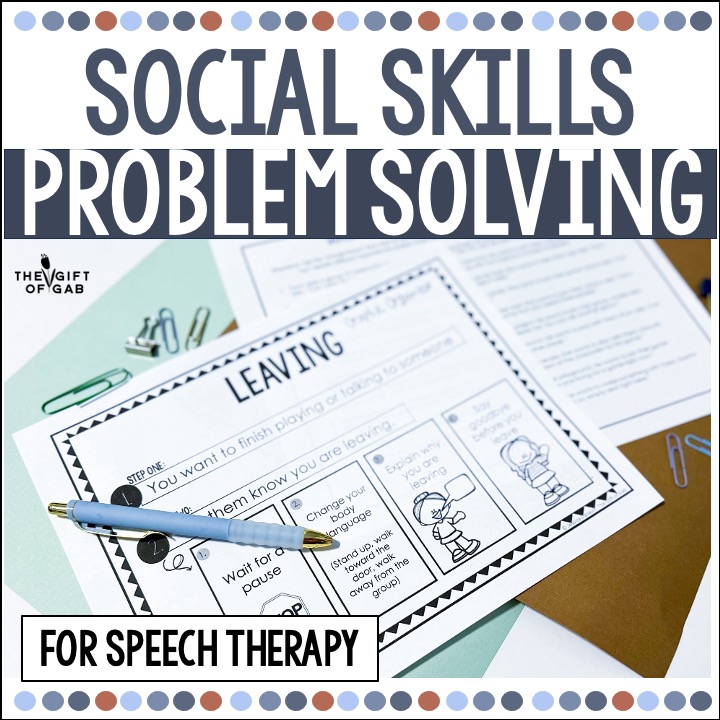
So I made the thing I wished I had. A new social skills problem-solving resource.
- A resource built with strategy
- Lessons that actually survive contact with a real therapy room
- Something that saves you (us) hours, not adds to your to-do list
- An easy way to collect data on a difficult-to-teach topic
I hate not that feeling of not knowing how to target a goal. I also hate feeling like I don’t have time to figure it out. That is why I spent my Thanksgiving break creating a new resource.
Why I am telling you about this tricky social skills goal…
While I created this resource with a particular goal in mind, it can easily be adapted to many social skills problem-solving goals. If you have a student on your caseload who is also working on navigating social situations, I am hopeful it will help you too.
Inside you’ll find:
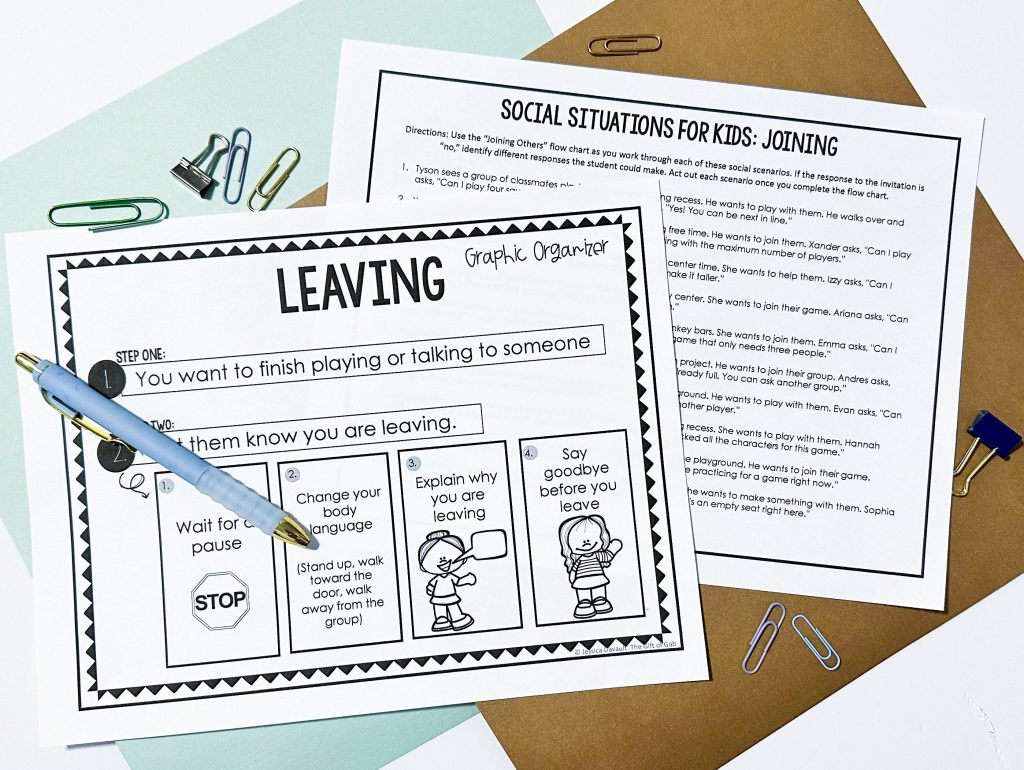
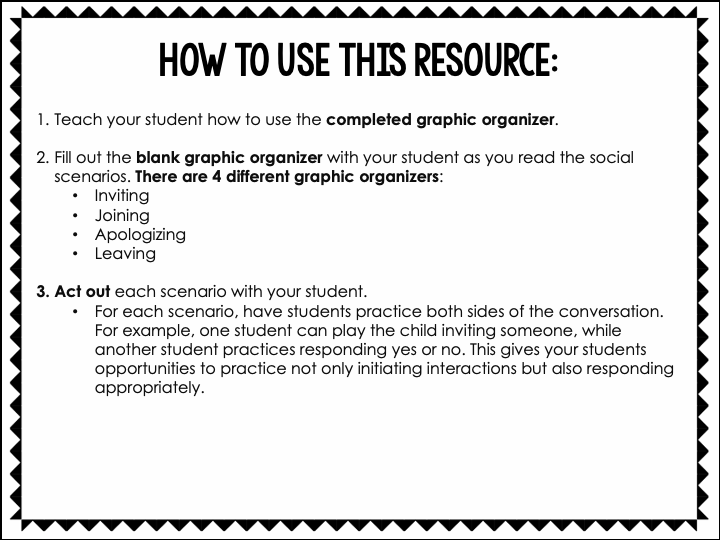
- 4 completed graphic organizers to show your student how to navigate the following social interactions: invite, join, apologize, and leave.
- 4 blank graphic organizers for your student to complete as they work through various social scenarios.
- 40 social scenarios for students (including 20 scenarios where a student must navigate rejection).
- Graphic organizers make it easy to collect data and identify where a social breakdown may be occurring.
- Prompts to act out each scenario so students can practice initiating and responding to social interactions.
- Data collection sheets
- Goal suggestions that can be used with this resource
I plan to begin using these social scenarios and graphic organizers in my own speech room. I think you will find them beneficial too!